

The demand for clean and renewable energy has been steadily increasing, with solar power emerging as a leading source. Solar panels are at the heart of this energy revolution, but their efficiency can be significantly affected by dirt, dust, and other debris. This is where dry clean solar panel cleaning robots come into play. As a supplier of dry clean solar panel cleaning robots, I am often asked about the cleaning efficiency of these innovative machines. In this blog post, I will delve into the factors that determine the cleaning efficiency of a dry clean solar panel cleaning robot and how it can benefit solar power plants.
Understanding the Basics of Dry Clean Solar Panel Cleaning Robots
Dry clean solar panel cleaning robots are designed to clean solar panels without the use of water. This is a significant advantage, especially in areas where water is scarce or expensive. These robots use brushes, rollers, or other mechanical means to remove dirt and debris from the surface of the solar panels. They are typically equipped with sensors and navigation systems to ensure that they move smoothly and efficiently across the panels, cleaning every inch of the surface.
One of the key components of a dry clean solar panel cleaning robot is its cleaning mechanism. The type of brushes or rollers used can have a significant impact on the cleaning efficiency. For example, some robots use soft brushes that are gentle on the panel surface but may not be as effective at removing stubborn dirt. Others use harder brushes or rollers that can provide a more thorough clean but may pose a risk of scratching the panels. As a supplier, we carefully select the cleaning mechanism based on the specific needs of our customers and the type of solar panels they use.
Factors Affecting Cleaning Efficiency
Several factors can affect the cleaning efficiency of a dry clean solar panel cleaning robot. Understanding these factors is crucial for ensuring that the robot performs at its best and provides the maximum benefit to the solar power plant.
- Dirt and Debris Type: The type of dirt and debris on the solar panels can have a significant impact on the cleaning efficiency. For example, dust and sand are relatively easy to remove, while bird droppings and tree sap can be more stubborn. Our robots are designed to handle a wide range of dirt and debris types, but in some cases, additional cleaning cycles or specialized cleaning solutions may be required.
- Panel Surface Condition: The condition of the panel surface can also affect the cleaning efficiency. Scratches, cracks, or other damage to the panel surface can make it more difficult for the robot to remove dirt and debris. In addition, some panels may have a hydrophobic coating that can make the cleaning process more challenging. Our robots are equipped with advanced sensors and cleaning mechanisms that can adapt to different panel surface conditions and ensure a thorough clean.
- Robot Design and Features: The design and features of the dry clean solar panel cleaning robot can also play a role in its cleaning efficiency. For example, robots with a larger cleaning width can cover more area in less time, while robots with a higher cleaning speed can complete the cleaning process more quickly. In addition, features such as automatic obstacle detection and avoidance, self-cleaning brushes, and remote monitoring and control can improve the overall efficiency and reliability of the robot.
Measuring Cleaning Efficiency
Measuring the cleaning efficiency of a dry clean solar panel cleaning robot is essential for evaluating its performance and ensuring that it meets the needs of the solar power plant. There are several methods that can be used to measure cleaning efficiency, including:
- Visual Inspection: One of the simplest methods of measuring cleaning efficiency is to visually inspect the solar panels before and after cleaning. This can provide a general idea of how much dirt and debris has been removed, but it may not be very accurate.
- Power Output Measurement: Another method of measuring cleaning efficiency is to measure the power output of the solar panels before and after cleaning. A clean solar panel will typically produce more power than a dirty one, so an increase in power output can indicate that the cleaning process has been effective.
- Surface Reflectance Measurement: Surface reflectance measurement is a more accurate method of measuring cleaning efficiency. This involves using a device to measure the amount of light reflected off the surface of the solar panels before and after cleaning. A higher reflectance value indicates a cleaner surface.
Benefits of Using a Dry Clean Solar Panel Cleaning Robot
Using a dry clean solar panel cleaning robot can provide several benefits for solar power plants, including:
- Increased Energy Production: By keeping the solar panels clean, a dry clean solar panel cleaning robot can help to increase the energy production of the solar power plant. This can result in higher revenues and a better return on investment.
- Reduced Maintenance Costs: Cleaning solar panels manually can be a time-consuming and labor-intensive process. By using a dry clean solar panel cleaning robot, solar power plants can reduce their maintenance costs and free up their staff to focus on other tasks.
- Water Conservation: As mentioned earlier, dry clean solar panel cleaning robots do not use water, which can be a significant advantage in areas where water is scarce or expensive. By using these robots, solar power plants can help to conserve water and reduce their environmental impact.
- Improved Safety: Cleaning solar panels manually can be a dangerous task, especially for large solar power plants. By using a dry clean solar panel cleaning robot, solar power plants can improve the safety of their staff and reduce the risk of accidents.
Our Products and Solutions
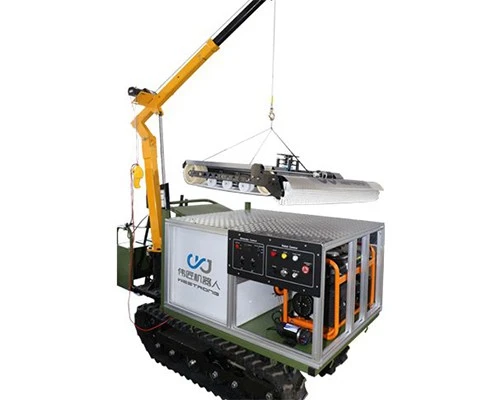
As a supplier of dry clean solar panel cleaning robots, we offer a range of products and solutions to meet the specific needs of our customers. Our products include the WJ2500 Robot Transport Vehicle, which is designed to transport the cleaning robot to different locations on the solar power plant, and the Water Proof Battery, which provides reliable power for the robot. In addition, we also offer the VT1000 PV Panel Cleaning Robot, which is a high-performance cleaning robot that can clean solar panels quickly and efficiently.
Our products are designed with the latest technology and features to ensure maximum cleaning efficiency and reliability. They are also easy to operate and maintain, making them a cost-effective solution for solar power plants of all sizes.
Conclusion
The cleaning efficiency of a dry clean solar panel cleaning robot is determined by several factors, including the dirt and debris type, panel surface condition, and robot design and features. By understanding these factors and using the right measuring methods, solar power plants can ensure that their cleaning robots are performing at their best and providing the maximum benefit.
As a supplier of dry clean solar panel cleaning robots, we are committed to providing our customers with high-quality products and solutions that meet their specific needs. Our products are designed to improve the efficiency, reliability, and profitability of solar power plants, while also reducing their environmental impact.
If you are interested in learning more about our dry clean solar panel cleaning robots or would like to discuss your specific requirements, please contact us. We look forward to the opportunity to work with you and help you achieve your solar energy goals.

References
- "Solar Panel Cleaning: A Review of Cleaning Methods and Technologies," Journal of Renewable and Sustainable Energy, Vol. 10, No. 4, 2018.
- "Effect of Dust and Dirt on Solar Panel Performance," Renewable Energy, Vol. 120, 2018.
- "Design and Development of a Solar Panel Cleaning Robot," International Journal of Advanced Robotic Systems, Vol. 15, No. 6, 2018.


