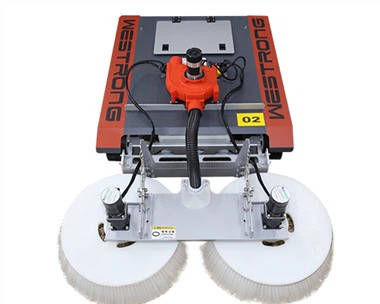
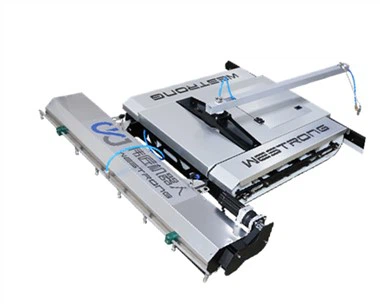
As the demand for renewable energy continues to soar, photovoltaic (PV) solar power has emerged as a leading solution in the global energy transition. With large-scale solar projects becoming increasingly prevalent, the need for efficient and reliable PV solar panel cleaning solutions has become paramount. In this blog, we will explore the scalability of autonomous PV solar panel cleaners for large-scale projects, drawing on our experience as a leading supplier of these innovative cleaning technologies.
The Challenge of Cleaning Large-Scale PV Solar Installations
Large-scale solar farms can span hundreds or even thousands of acres, housing thousands of PV solar panels. These panels are constantly exposed to various environmental elements, such as dust, dirt, bird droppings, and pollen, which can accumulate on the panel surfaces over time. This accumulation of debris reduces the amount of sunlight that reaches the PV cells, leading to a significant decrease in energy production. According to industry studies, dirty solar panels can experience a power output reduction of up to 30%, which can have a substantial impact on the overall profitability of a solar project.
Manual cleaning of large-scale PV solar installations is not only labor-intensive but also time-consuming and costly. It requires a large workforce, specialized equipment, and careful planning to ensure that all panels are cleaned thoroughly and safely. Moreover, manual cleaning can be challenging in remote or hard-to-reach locations, and it may not be feasible to clean panels on a regular basis due to weather conditions or other logistical constraints.
The Solution: Autonomous PV Solar Panel Cleaners
Autonomous PV solar panel cleaners offer a revolutionary solution to the challenges of cleaning large-scale solar installations. These advanced robotic systems are designed to operate independently, using state-of-the-art sensors, algorithms, and cleaning mechanisms to remove dirt and debris from PV panels efficiently and effectively. Unlike manual cleaning, autonomous cleaners can work around the clock, regardless of weather conditions, and can cover large areas in a relatively short period of time.
One of the key advantages of autonomous PV solar panel cleaners is their scalability. These systems can be easily customized and configured to meet the specific needs of large-scale solar projects, regardless of their size or complexity. Whether it's a small rooftop installation or a massive utility-scale solar farm, autonomous cleaners can be deployed in a variety of configurations, including single-panel cleaners, row cleaners, and centralized cleaning systems.
Scalability Features of Autonomous PV Solar Panel Cleaners
Modular Design
Many autonomous PV solar panel cleaners are designed with a modular architecture, which allows them to be easily expanded or reconfigured as needed. This means that solar project developers can start with a small number of cleaners and gradually add more units as the project grows or as cleaning requirements change. Modular design also makes it easier to replace or upgrade individual components of the cleaning system, reducing downtime and maintenance costs.


Centralized Control and Monitoring
Advanced autonomous PV solar panel cleaners are equipped with centralized control and monitoring systems, which enable operators to manage and optimize the cleaning process from a single location. These systems provide real-time data on the performance of each cleaner, including cleaning efficiency, battery status, and maintenance requirements. Operators can use this data to schedule cleaning cycles, adjust cleaning parameters, and identify any potential issues before they become major problems.
Compatibility with Different Panel Types and Configurations
Autonomous PV solar panel cleaners are designed to be compatible with a wide range of panel types and configurations, including flat panels, tilted panels, and tracking systems. This flexibility allows them to be used in a variety of solar project settings, from residential rooftops to large-scale solar farms. Additionally, many cleaners can be customized to accommodate specific panel sizes and spacing, ensuring a precise and effective cleaning operation.
Energy Efficiency
In addition to their cleaning capabilities, autonomous PV solar panel cleaners are also designed to be energy-efficient. Many systems are powered by solar energy, which means that they can operate independently without the need for external power sources. This not only reduces the operating costs of the cleaning system but also makes it more environmentally friendly.
Case Studies: Scalability in Action
To illustrate the scalability of autonomous PV solar panel cleaners in large-scale projects, let's take a look at some real-world case studies.
Case Study 1: Utility-Scale Solar Farm
A large utility-scale solar farm in the southwestern United States was experiencing significant power output losses due to dust and dirt accumulation on its PV panels. The manual cleaning process was labor-intensive and costly, and it was estimated that the panels needed to be cleaned at least once a month to maintain optimal performance.
The solar farm operator decided to invest in a centralized autonomous cleaning system, which consisted of multiple JR4000 Centralized Solar Panel Cleaning Robot units. These robots were designed to clean multiple rows of panels simultaneously, using a combination of brushes and water jets to remove dirt and debris.
The centralized control system allowed the operator to schedule cleaning cycles based on the weather conditions and the level of dirt accumulation on the panels. The robots were able to clean the entire solar farm in a matter of days, significantly reducing the time and cost associated with manual cleaning. As a result, the power output of the solar farm increased by over 20%, leading to a substantial increase in revenue for the operator.
Case Study 2: Rooftop Solar Installation
A commercial building in a major city had installed a large rooftop solar array to offset its electricity consumption. However, the panels were located in a high-traffic area and were constantly exposed to dust, dirt, and bird droppings. The building owner was concerned about the impact of dirty panels on the energy production of the solar array and was looking for a cost-effective and efficient cleaning solution.
The building owner decided to install a fleet of BR10 PV Panel Cleaning Robot units, which were designed to clean individual panels autonomously. These robots were equipped with sensors and cameras to detect dirt and debris on the panels and were able to adjust their cleaning parameters accordingly.
The robots were able to clean the rooftop solar array on a regular basis, ensuring that the panels were always operating at peak efficiency. The building owner was able to reduce the maintenance costs of the solar array and increase its energy production by over 15%. Additionally, the autonomous cleaning system was able to operate quietly and without causing any disruption to the building's occupants.
Conclusion
In conclusion, the scalability of autonomous PV solar panel cleaners makes them an ideal solution for large-scale solar projects. These advanced robotic systems offer a cost-effective, efficient, and environmentally friendly way to keep PV panels clean and operating at peak efficiency. With their modular design, centralized control and monitoring systems, compatibility with different panel types and configurations, and energy efficiency, autonomous cleaners can be easily customized and scaled to meet the specific needs of any solar project.
If you are a solar project developer, operator, or owner looking for a reliable and scalable PV solar panel cleaning solution, we invite you to contact us to learn more about our range of autonomous cleaning technologies. Our team of experts will be happy to work with you to develop a customized cleaning solution that meets your specific requirements and budget.
References
- "The Impact of Soiling on Solar Photovoltaic Systems: A Review," Renewable and Sustainable Energy Reviews, Volume 62, January 2016, Pages 120-139.
- "Autonomous Solar Panel Cleaning Robots: A Review," Journal of Cleaner Production, Volume 254, 10 January 2020, 120177.
- "Scalability of Renewable Energy Systems: A Review," Renewable and Sustainable Energy Reviews, Volume 114, December 2019, 109377.