As a supplier of photovoltaic cleaning robots, I often encounter questions from customers about how our robots handle snow removal on solar panels. Snow accumulation on solar panels can significantly reduce their efficiency and power output, making it crucial to have an effective snow removal solution. In this blog post, I will delve into the mechanisms and technologies our photovoltaic cleaning robots employ to tackle this issue.
The Impact of Snow on Solar Panels
Before discussing the snow - removal capabilities of our robots, it's important to understand why snow is a problem for solar panels. Solar panels generate electricity by converting sunlight into electrical energy. When snow covers the surface of the panels, it blocks sunlight from reaching the photovoltaic cells, thus reducing or even halting the power - generation process.
Moreover, the weight of the snow can put additional stress on the solar panel installation structure. If the snow load exceeds the design capacity, it may cause physical damage to the panels or the mounting system. Therefore, timely snow removal is essential for maintaining the optimal performance and longevity of solar panels.
How Our Photovoltaic Cleaning Robots Are Designed for Snow Removal
1. Brush Design and Material
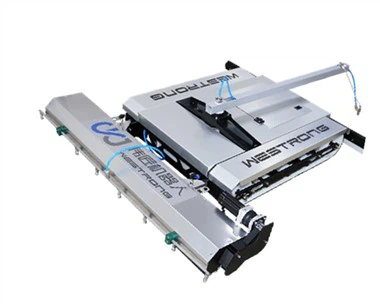
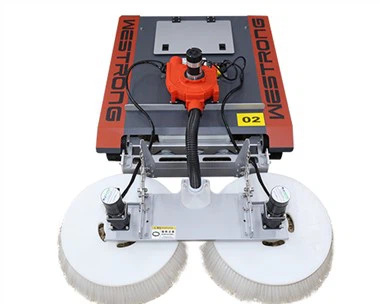
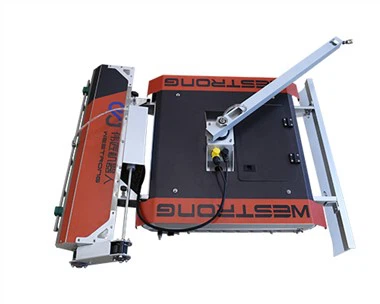
Our cleaning robots, such as the BQ - 600 Water Pipe Solar Panel Cleaning Robot, are equipped with specially designed brushes. The brushes are made of a durable and flexible material that can effectively sweep away snow without scratching the surface of the solar panels. The bristles have a certain stiffness to break up the snowpack and a softness to ensure gentle contact with the panels.
The brush rotation speed can be adjusted according to the snow conditions. In light snow, a relatively low - speed rotation may be sufficient to clear the snow. However, in heavy and compacted snow, a higher rotation speed can be set to break up the snow more effectively.
2. Heating Elements
Some of our high - end models, like the BQ - 1300S Westrong PV Cleaning Robot Component Cleaning Robot, are integrated with heating elements. These elements can be activated when operating in snowy conditions. The heat generated helps to melt the snow in contact with the solar panels' surface, making it easier for the brushes to remove.


The heating elements are designed to be energy - efficient. They are controlled by a smart system that monitors the ambient temperature and snow depth. Only when the conditions meet certain criteria, such as when the temperature is below a certain threshold and there is a significant snow accumulation, will the heating elements be turned on. This way, we can ensure both effective snow removal and energy conservation.
3. Water - Based Cleaning System
In addition to mechanical snow - removal methods, our robots also utilize a water - based cleaning system in some cases. The BQ - 600 Water Pipe Solar Panel Cleaning Robot is a good example. In mild snow conditions, a small amount of pre - heated water can be sprayed onto the solar panels. The warm water helps to melt the snow quickly, and then the combination of the water flow and the brushes can wash away the melted snow.
The water - based system also has the advantage of being able to clean the panels more thoroughly after the snow is removed. It can remove any remaining dirt or debris that may have been trapped under the snow, further improving the power - generation efficiency of the solar panels.
Intelligent Snow - Detection and Operation
Our photovoltaic cleaning robots are equipped with advanced sensors for snow detection. These sensors can accurately measure the thickness of the snow layer on the solar panels. Based on the data collected, the robot can automatically adjust its operation mode.
For example, if the snow layer is thin, the robot may start with a simple brushing operation. As the snow depth increases, it may activate the heating elements or use the water - based cleaning system in combination with the brushes. The intelligent control system also takes into account other factors, such as the angle of the solar panels and the ambient temperature.
The robots can be programmed to operate at specific times, such as early in the morning when the snow is likely to be less compacted. They can also be connected to a remote monitoring system, allowing operators to keep an eye on their performance and make real - time adjustments if necessary.
Maintenance and Longevity in Snowy Environments
Operating in snowy environments can pose challenges to the durability of the cleaning robots. However, we have designed our products with high - quality components and protective measures.
The exterior of the robots is made of corrosion - resistant materials that can withstand freezing temperatures and moisture. The internal electrical components are also well - insulated to prevent damage from the cold and humidity. Regular maintenance is still recommended, including checking the brushes for wear, inspecting the heating elements, and ensuring the proper functioning of the sensors.
Conclusion
Our photovoltaic cleaning robots offer a comprehensive solution for snow removal on solar panels. Through a combination of advanced brush design, heating elements, water - based cleaning systems, and intelligent operation, they can effectively clear snow from solar panels, ensuring optimal power generation and protecting the panels from damage.
If you are looking for a reliable partner for your solar panel cleaning needs, especially in areas with heavy snowfall, we are here to help. Our team of experts can provide you with detailed product information and customized solutions based on your specific requirements. Contact us to start a conversation about how our photovoltaic cleaning robots can benefit your solar energy system.
References
- [Solar Energy Handbook], John Wiley & Sons, Inc.
- [Advanced Robotics in Industrial Applications], IEEE Publications